Last updated on : April 6th, 2026 by R Yadav
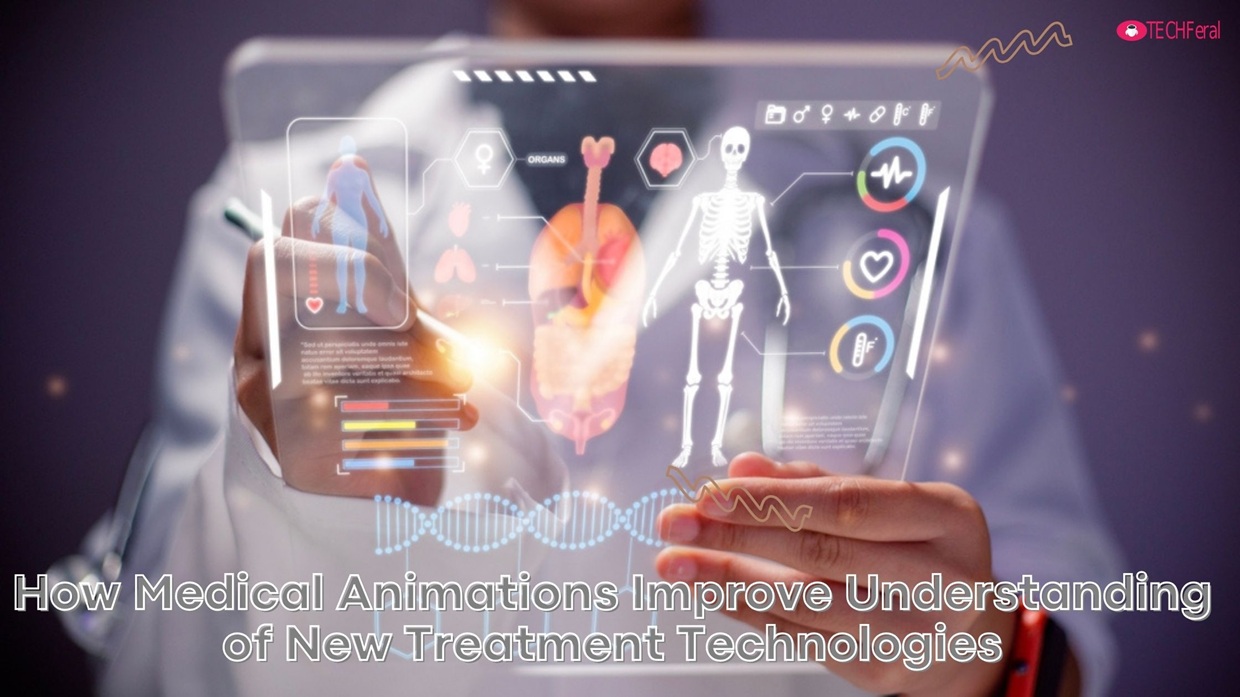
Medical technology is changing the course of diagnosis, treatment, and management of diseases. Nevertheless, modern treatment technologies may be too complicated to be easily comprehended by patients, healthcare professionals, and even stakeholders. Complicated processes, microscopic operations, and complex devices cannot be readily described by text or still images. This makes effective communication an essential element in the process of introducing and adopting new medical innovations.
The solution to this problem is through medical animations. Animations simplify complex information and make it easier to understand by graphically depicting biological processes and treatment functions at work. These visual aids are used to bridge the gap between theoretical knowledge and practical knowledge to enable audiences to better understand how new technologies work and their relevance to healthcare.
Various novel treatment technologies are at the molecular or cellular level. It may be very difficult to describe or explain how a therapy interacts with tissues, proteins or genetic material using standard diagrams or written descriptions. With medical animations, these processes can be visual and dynamic in their presentation and show how various biological components interact with one another with the passage of time.
When the viewers are subjected to a treatment mechanism step by step, they are better able to understand the cause and effect in the body. A case in point is how a desired drug moves through the blood, attaches to particular receptors, and inhibits noxious cellular functions. This strategy makes very technical information simple and enables professionals as well as patients to visualize those processes which might have been abstract.
Before new treatment technologies can be effectively used in clinical settings, specific training is usually necessary. Medical animations are significant in the learning environment as they assist the healthcare professionals in understanding how new treatments and equipment operate. These teaching materials enable educators to illustrate processes and operations in a manner that facilitates a greater understanding.
Lectures, workshops and online learning modules in educational institutions and medical training programs often use animated visuals. The inner workings of a surgical device or the route of a new treatment can have a well designed scientific animation used to demonstrate how it works. It is a visual clarity that is used to make professionals comprehend not only the working principle of the technology but why some clinical decisions are needed to use it.
Patients are also taking an active role in making decisions regarding their medical care. Nevertheless, a lot of the next-generation treatment technologies contain ideas that are new or seem complex. Medical animations are a patient friendly method of explaining these technologies without compromising scientific accuracy.
Patients are in a better position to comprehend the aim of the treatment and its anticipated results in case they are able to visualize how a treatment would work within the body. Pictorial descriptions minimize misunderstandings and make patients feel more secure about their treatment options. In consultations, doctors tend to use animated images to explain the procedures, show the effects of the treatment process, and answer questions that might be raised in the decision making process.
New treatment technologies are developed in cooperation with researchers, engineers, medical professionals, and investors. It may be challenging to deliver the findings of complex research to these diverse groups. Medical animation provides a common visual lingo that can be used to render technical information effectively and easily.
Animated presentations can be used to show how a new device or therapy works on biological systems to which researchers can use. These images enable partners to learn major processes fast without having to possess a lot of technical knowledge. This enhances communication in research meetings, scientific conferences and project development discussions.
It is also necessary that companies that develop new medical technologies should inform more people about their products. The healthcare professionals, investors, and regulatory bodies must also be aware of the nature of a treatment and its beneficial effects. Medical animations can facilitate these explanations and make them easy to understand without being scientifically weak.
An example is 3D medical animations which can be used to show the design and operation of a medical device in a realistic and appealing way. These images emphasize important aspects that may not be clearly communicated in a textual format. Animations can be used to explain complex technologies in an appealing manner that assists organizations to communicate the worth of their innovations and raise awareness among the professional and general audiences.
The necessity to use effective communication tools is growing as healthcare technologies are constantly changing. Medical animation offers a persuasive way of explaining complicated treatments, equipment, and biological functions in a simple and understandable way. These animations can make audiences interact with medical information better by converting scientific ideas into visual stories.
Medical animations can be very critical in facilitating the implementation of new technologies in treatment through enhanced education, communication with the patients, research partnerships, and awareness among the population. Visual communication tools are not going to leave as they will still be needed to make people know about the innovations that define the future of medicine.
Read Next: Why You Should Invest in Smart Door Locks for Better Home Safety